
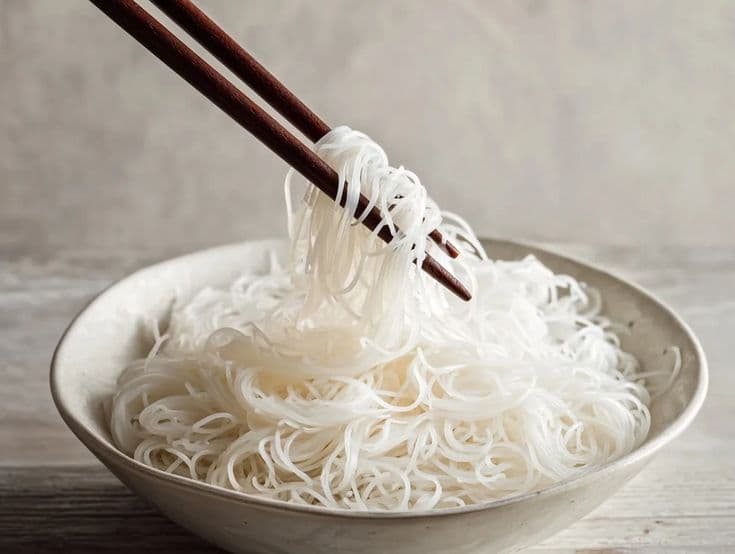
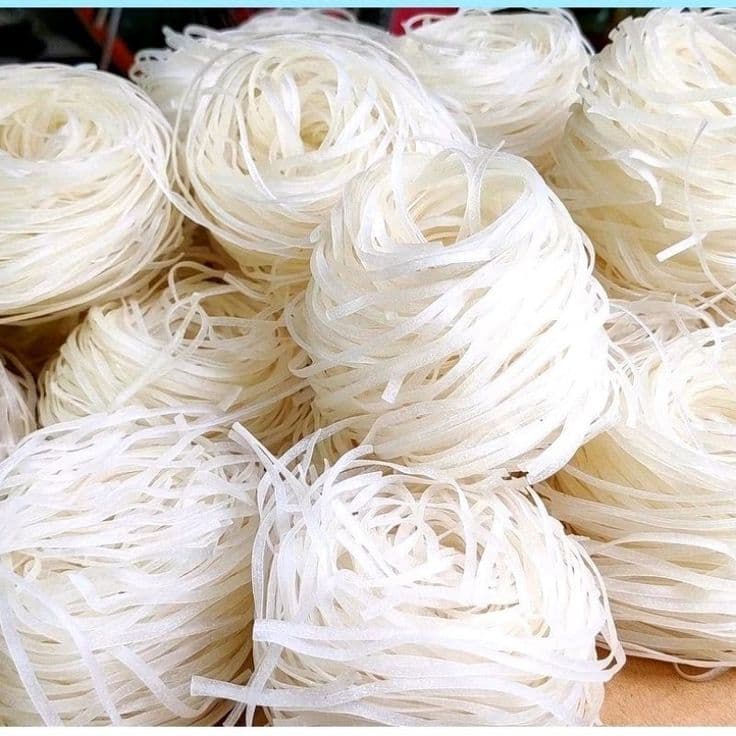
Light as silk threads yet rooted in centuries of culinary tradition, Vietnamese dried rice noodles—bún khô and phở khô—carry the essence of Vietnam’s cuisine to kitchens around the world. Behind their simplicity lies a refined process that balances science, craftsmanship, and strict quality control.
Premium Raw Materials: The Foundation of Quality
Great noodles begin with great rice. High-quality long-grain rice is selected for high starch purity, low impurity levels, and natural aroma. Clean water meeting food-grade standards is equally essential.
Controlled Milling & Rice Slurry Preparation
Rice is soaked and wet-milled into fine slurry with precise water-to-rice ratio and controlled particle size. No bleaching agents or artificial additives are used, producing a naturally clean and uniform batter.
Shaping: The Difference Between Bún and Phở
Bún khô is extruded into thin round strands, while phở khô is steamed into sheets and cut into flat strips. Modern systems ensure consistent thickness, smooth structure, and minimal breakage.
Low-Temperature Drying Technology
Drying at controlled low temperatures (45–55°C) helps maintain starch structure, prevent brittleness, and preserve elasticity after rehydration.
Quality Control & Food Safety Standards
Every batch is inspected for preservative-free integrity and compliance with HACCP, ISO 22000, and Codex, including microbial and residue testing with full traceability.
Packaging & Shelf Life Stability
Products are packed with vacuum sealing or MAP and moisture-proof materials, supporting 12–18 months shelf life under proper storage conditions.
Article Gallery
Conclusion
Dried rice noodles may appear simple, but their quality depends on a delicate balance of raw materials, precise processing, and scientific control. At Hoàng Phú Thịnh, every strand and strip reflects a commitment to authenticity, safety, and global standards.